
How to Use Use Printable Worksheets and Integrate into Your Child’s Daily Routine
The Quick Answer: To use worksheets for kids effectively, they should be integrated as “Transition Tools” or “Quiet Time Anchors” rather than standalone chores. Experts recommend using high-quality printable worksheets during “Bridge Moments” such as right after breakfast or while preparing dinner to maintain a calm, structured environment while fostering independent learning.
☀️ Why Printable Worksheets Still Work So Well in 2026
If you’ve ever struggled to keep kids focused, you’re not alone.
Whether you’re a mom, teacher, or daycare provider, managing children’s time especially during summer can feel overwhelming.
While we live in a digital world, cognitive worksheets for kids are seeing a 540% surge in interest (Pinterest Trends 2026). That’s where Bright Start printable worksheets come in.
At Bright Start Systems, we believe in creating simple systems that make learning easier, not harder.
Printable worksheets are effective because they are:
- Easy to set up
- Familiar for children
- Structured but flexible
- Great for independent learning
Our printable worksheets help:
-
Improve Fine Motor Skills: Hand-eye coordination through coloring and tracing cannot be replicated on a screen.
-
Reduce Digital Fatigue: They provide a necessary “brain break” from blue light.
-
Create Tangible Achievement: A child feels a physical sense of pride holding a completed worksheet.
3 Strategic Ways to Use Printable Worksheets in Your Daily Routine
1. The “Morning Warm-Up” (Daycare & School)
Instead of letting kids jump straight into high-energy play, use a simple printable activity to center their focus.
-
How to do it: Have a “Morning Packet” waiting at their desk or table. Use tracing sheets, weather-matching cards, or “How I Feel Today” drawing prompts.
-
The Benefit: This sets a calm tone for the day and gives the provider/parent 15 minutes to handle administrative tasks or prep.
2. The “Dinner Prep” Bridge (For Moms)
The “witching hour” (5:00 PM – 6:00 PM) is the hardest time for parents. This is the peak time for “screen-time requests.”
-
How to do it: Swap the iPad for a thematic worksheet bundle. If you’re making spaghetti, give them a “Counting Vegetables” or “Color the Kitchen” sheet.
-
The Keyword Strategy: When searching for how to use worksheets for kids, look for “low-prep” or “no-prep” options to ensure you aren’t adding more work to your plate.
3. The “Quiet Time” Anchor
For children who have outgrown naps but still need rest, summer edition printable worksheets are a lifesaver.
-
How to do it: Create a “Quiet Folder” filled with logic puzzles, mazes, and find-the-difference sheets. These keep the brain active while the body rests.
✏️ How to Use Printable Worksheets for Kids Without Resistance
Many parents worry that worksheets will feel like “extra work,” but when used correctly, they can become engaging, low-pressure learning tools. The key to how to use printable worksheets for kids is to keep them short, fun, and part of a natural routine rather than a forced task. Choosing colorful, age-appropriate printable activities and offering children simple choices like tracing or coloring helps shift the experience from work to play. At Bright Start Systems, our printable worksheets are designed to feel interactive and enjoyable, making it easier for kids to stay engaged while building essential skills.
Here’s how to make them enjoyable:
✔ Keep It Short
- 10–20 minutes is enough
- Avoid overwhelming children
✔ Make It Visual and Fun
- Use colorful, themed worksheets (like summer designs ☀️)
- Choose age-appropriate activities
✔ Offer Choices
Instead of forcing:
👉 “Do this worksheet”
Try:
👉 “Do you want to trace shapes or color today?”
This simple shift increases cooperation.
For maximum management, be sure to:
-
Laminate for Longevity: Turn a one-time worksheet into a reusable activity using dry-erase markers. This is a favorite hack for daycare owners on a budget.
-
Follow the Interest: Don’t force a math sheet if they are obsessed with dinosaurs. Use customizable digital downloads (like those at BrightStart) to print what they actually love.
-
Celebrate the Process: Don’t just check for “right answers.” Praise the effort, the grip on the crayon, and the focus.
🧸 What Types of Worksheets Work Best?
Not all worksheets are created equal.
The best printable activities for kids are:
- Visually engaging
- Simple to understand
- Skill-focused
✔ Examples:
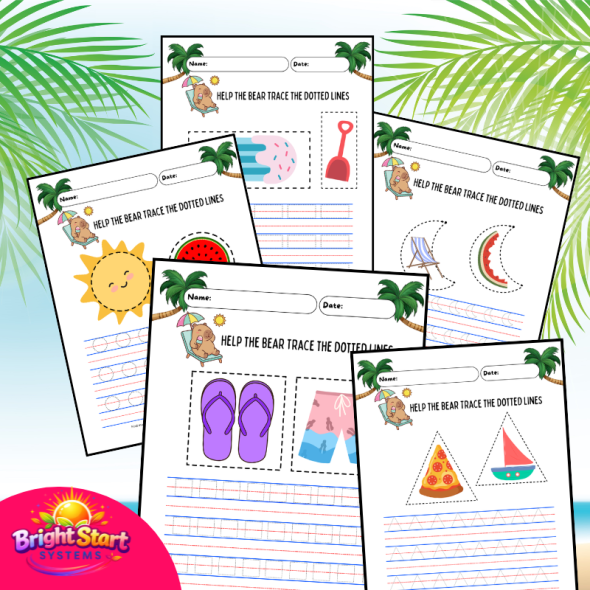
- Shape tracing worksheets
- Coloring pages
- Matching and sorting activities
- Fine motor skill exercises
At Bright Start Systems, our worksheets are designed to combine learning and play—making them ideal for both home and childcare settings.
👩🏫 How Teachers and Daycare Providers Can Use Printable Worksheets
Printable activities are especially useful in group settings.
They can be used for:
- Morning table work
- Transition time between activities
- Quiet individual play
- Mixed-age group engagement
Using structured tools helps reduce chaos while keeping children focused.
🌈 Common Mistakes to Avoid
When learning how to use worksheets for kids, avoid these:
❌ Using worksheets for too long
❌ Choosing activities that are too difficult
❌ Forcing participation
❌ Overloading the day with too many tasks
✔ Keep it simple, flexible, and fun.
❓ FAQ: Solving Common Worksheet Challenges
Are worksheets developmentally appropriate for toddlers?
Yes, if they are play-based. For toddlers, “worksheets” should look like large-scale coloring, finger-painting prompts, or “dot-marker” activities rather than heavy writing.
How do I stop my child from getting frustrated with printable worksheets?
Keep sessions short (10–15 minutes) and ensure the level is “just right”—challenging enough to be interesting, but easy enough to complete independently.
Where can I find high-quality, 2026-standard printables?
The BrightStart Digital Shop specializes in modern, research-backed printable activities designed specifically for busy daily routines.
How long should kids use worksheets each day?
10–20 minutes per session is ideal for maintaining focus without overwhelm.
Are worksheets effective for preschoolers?
Yes, when they are simple, visual, and play-based, worksheets help build foundational skills.
Can worksheets replace play?
No—worksheets should support learning, not replace playtime.
How do I get my child to enjoy worksheets?
Offer choices, keep sessions short, and use fun, themed designs.
Make Daily Learning Easier with Printable Worksheets for Kids
Learning how to use worksheets for kids isn’t about “busy work.” It’s about creating a predictable, educational rhythm in your home or classroom. When used as a tool for transition and focus, printable worksheets for kids become the secret weapon for a stress-free day.
You don’t need a complicated plan to make worksheets effective.
To successfully learn how to use worksheets for kids, focus on:
✔ Short, structured sessions
✔ Consistent daily use
✔ Engaging, age-appropriate activities
Over time, these small habits build:
✨ Stronger skills
✨ Better focus
✨ More independent learners
Explore simple, ready-to-use printable activities at Bright Start Systems that are designed for moms, teachers, and childcare providers who want:
✔ Less stress
✔ More structure
✔ Engaged, happy kids